
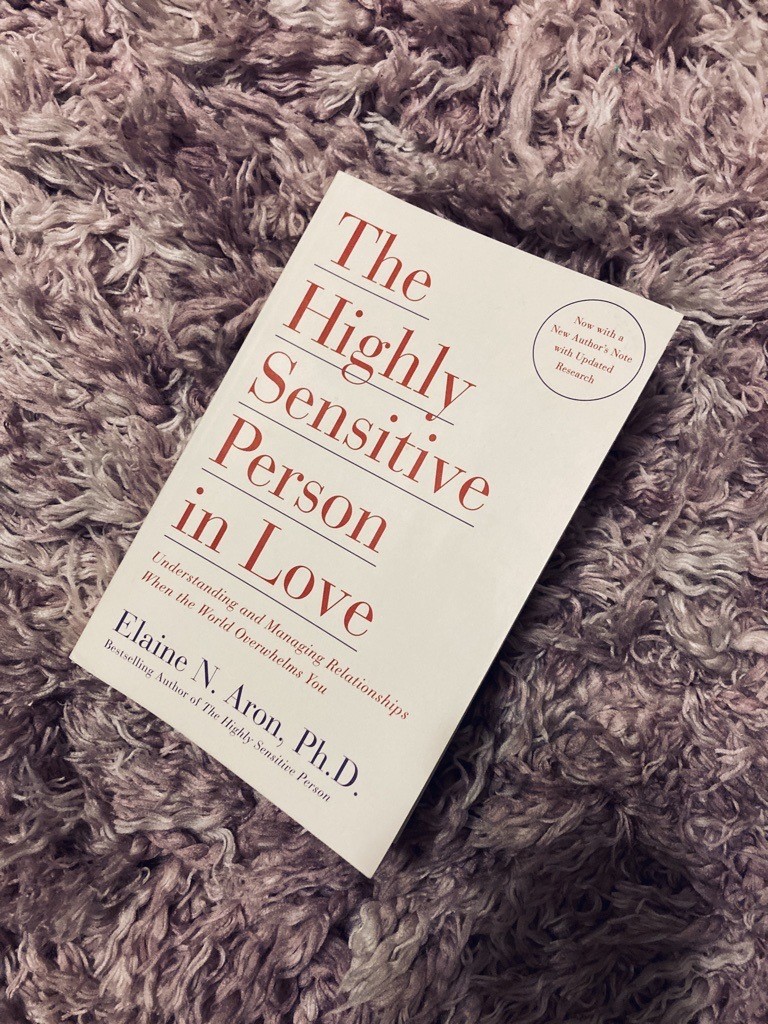
Author’s Note, 2016
- When overstimulated or “in a complex” HSPs can actually be insensitive in the sense of caring and wanting to help others
- Someone who is more aware of everything going on outside and inside themselves plus is processing those things more thoroughly will most likely wear out mentally and physically sooner than others and become stressed
- Without deep conversations, HSPs are especially likely to be bored in their relationships
- But HSPs tend not to let that detract from their overall relationship satisfaction
- Could be useful to think of ways to deepen the conversation to bring richness to the relationship for both HSPs and non-HSPs
- Guggenbuhl-Craig’s Marriage: Dead or Alive
- If one sees marriage as a way to develop character, to enrich the soul, often through struggle, then marriage is alive
- Martin Huber, I and Thou, The Knowledge of Man, Between Man and Man
- Give a sense of the depth of relationship HSPs seek
Introduction
- Pg 2 for full contrast between Elaine and Art, her husband, and how “intense” she seemed in comparison
- “I wasn’t always sure I wanted to be close or could be close to anyone”
- HSPs are 15-20% of the population born with a nervous system genetically designed to be more sensitive to subtleties, more prone to deep reflection on inner experience, and therefore inevitably more easily overwhelmed by outer events
- This isn’t a little quirk, this is a “major, normal, inherited difference in how the entire nervous system functions, affecting every aspect of life”
3 – HSPs and the Fear of Intimacy
Fear of Abandonment
- For HSPs, experiences of loss, abandonment or betrayal are heightened, especially if they were experienced in childhood before the self was strong enough to handle it
- One can avoid intimacy to be safe from loss but it is a better strategy to “risk intimacy, every day of your life, for you never know when your chance will be taken from you”
- You cannot predict or stop the sort of eruptions in a partner’s unconscious that can cause even the seemingly nicest person to suddenly betray you, but to be fair, nor can you completely control your own
- For you to imagine that you can risk love because you know you would somehow survive even a betrayal, you need to return to thoughts of who you were before you were with your partner
Fear of Loss of Control
- Relationships can warp the me-not-me boundary in that people in close relationships can sometimes confuse their own traits with those of their partner’s
- One of the gentlest ways to break down the me-not-me barrier is through intimacy, being merged with another person for a little while
- HSPs are able to do this easily, if they don’t fear it, because they are already used to a flexible boundary with the unconscious and need only to include the conscious and unconscious of another
Fear of Commitment
- When your partner is in a moment of struggle emotionally, sometimes it is best for them to work through it on their own instead of helping to restore their good feelings
- “If you do not feel able or willing to help, can you stay separate enough to endure letting the other person work it through without your intervening? You may be surprised to find that not only is it okay with your partner that you do not respond instantly, but it is a relief not to have you hovering, helping when you didn’t really want to, or helping only because you must reduce your own discomfort.”
The Four Attachment Styles
- The preoccupied style: you want very much to be in an intimate relationship but fear the other will not reciprocate
- This is because, typically, your caretaker was very inconsistent – completely unavailable at times, intrusively overinvolved at other times
- The person may have wanted you to stay a needy child, even when you were ready to be independent
- As an adult, you may keep trying out different ways to attract and keep someone’s love, generally suspecting that the other person is about to lose interest
- To sum up, you feel good about others – they seem wonderful, better than you – but insecure about your own worthiness
- The fearful avoidant: you are chronically shy, anxious, depressed and lonely
- You want to be with others but fear rejection so you are highly conflicted, highly aroused, and your reactions to chances to be close to others tend to be “disorganized”
- This “disorganization” might have created dissociation or trancelike “spaciness” because the attachment issue was an unending source of distress
- You feel safer assuming there is something terribly wrong with you
When The Other Fears Intimacy
- Your best strategy is to be even more intimate, honest and vulnerable yourself – whatever the results
- Be as honest and intimate as you can, as often as you can. If it doesn’t help that relationship, it will develop you for the next one
3 – Falling in Love
Falling After Dwelling on the Other’s Virtues
- Research shows that the longer you contemplate an object in an emotional way, the more intense the emotions toward that object will become
- Of course, because HSPs process more deeply, we feel more affection than others
Love From Afar, Unrequited Love, Impossible Love
- Consciously wanting to be in love but unconsciously fearing intimacy makes an impossible love the perfect solution, especially for fearful avoidant or dismissing-avoidant
- “Perhaps the best brief course in transforming an impossible love into what you need comes from Carl Jung. He was fond of saying that the unconscious creates just such terrible situations ‘in order to force the individual to bring out his very best… to renounce one’s will and one’s own wit and do nothing but wait and trust to the impersonal power of growth and development.’ So when up against a wall, Jung would always say that to see over the wall you must not struggle and climb, but put down roots like a tree and wait for clarity to come from deeper sources.”
5 – HSPs with Non-HSPs
Solutions for Problems Due to Differences in Optimal Level of Arousal
- Have a room or corner of your own to decorate and retreat to
- Live somewhere quiet, if possible
- Be in nature regularly
- Avoid unnecessary decisions and choices
- Have your partner respect your routines
- Stick to a budget or financial plan
- Have time margins – extra time baked in
- Keep holidays simple and meaningful
- Balance life with sufficient sleep, exercise, downtime, spiritual experiences, etc.
Differences – How Reasons for Love Become Reasons for Contempt
- Sensitive people are overwhelmed by the myriad of cues we receive about the other person when we become very close
- You may notice more flaws in your partner than they notice in you
- You may avoid any comment about shortcomings because it hurts to deeply process another’s criticism of us, too. To avoid being criticized, you may decide never to criticize your partner and to be above all criticism yourself
The Problem Due to Low HSP-Esteem
- You have likely developed a deeply rooted lack of self-esteem because of the differences in you growing up and the subtle wished from the people you loved to change you or wish you were different
- Feeling fundamentally flawed is a terrible obstacle to love
- The psyche places protection of your fragile ego ahead of everything else
- Whom you love, how intimate you become, how you respond to a flirtation or rejection are all determined by whether it will bolster or further weaken the ego’s self-esteem
- The effect on your partner of how you respond to him or to others has to come second
7 – Creating a Satisfying, Sensitive Partnership
Beware of the Moments When Essential Spirit Departs
- Whether you silence yourself depends on whether you feel courageous, in tune with your essential spirit, or you feel like a child giving in to the parental prevailing spirit out of an old fear of abandonment
- That child has no choice but to repress his or her own desires and adapt, stifling essential spirit
The Shadow Knows
- People with low self-esteem, such as many HSPs, stuff away their good qualities and have “white shadows”
- And, given your intuition, you probably like to talk about complicated things like philosophy, feelings, and struggles
9 – The Spiritual Path of HSPs
For HSPs in Long-Lasting Loves
- Jung:
- “The unrelated human being lacks wholeness, for he can achieve wholeness only through the soul, and the soul cannot exist without its other side, which is always found in a “You.” Wholeness is a combination of I and You, and these show themselves to be parts of a transcendent unity whose nature can only be grasped symbolically.”
- With our lovers we can face our shadows and complexes, withdraw our projections and accept our limits due to our personalities and temperaments, plus have our chance to transcend these limits, to be more whole, through the other possessing some of what we lack.
- It could also suggest that the relationship is part of the Self, a fresh symbol of the Self pointing back to the Self.
- It may be that not every relationship has this strong sense of coming from the Self and returning to it. But when a relationship does, it has a fated quality
 moodybreadcrumbs