
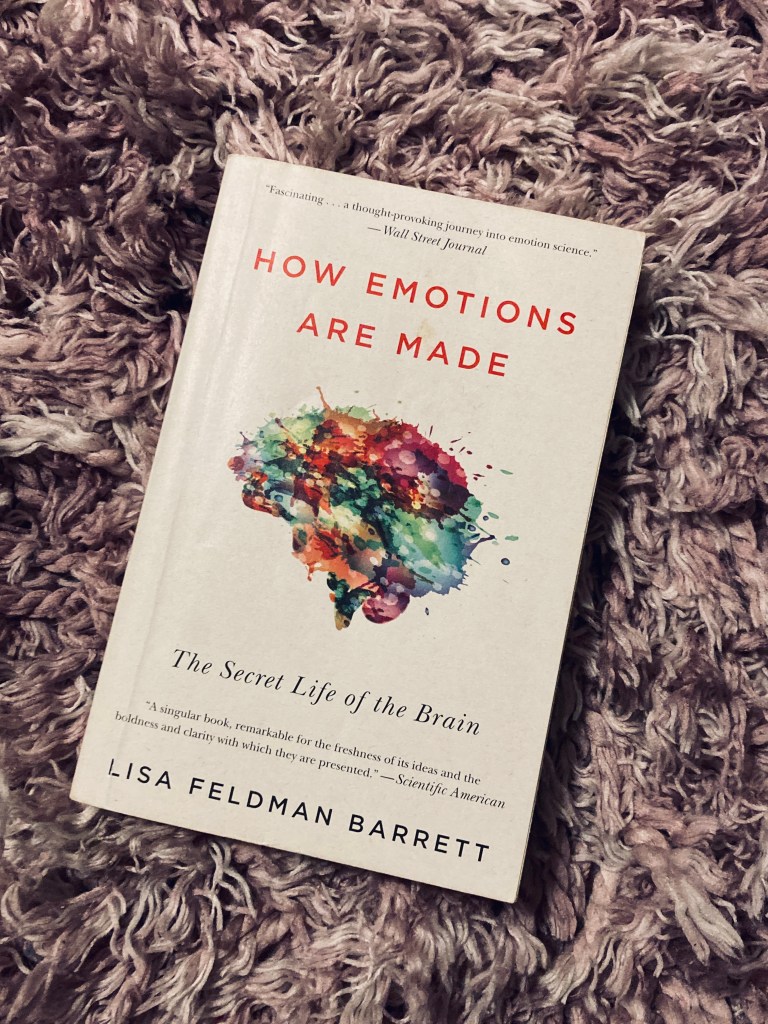
- Theory of constructed emotion: brain constructs experience of emotion based on inputs
- Emotions are not underlying patterns that can be triggered
- Core ideas:
- Emotion category varies by instance, context, etc. – variation is the norm
- Emotions experienced are not inevitable consequences of genes
- Emotion concepts are built-in only because of social context that has resulted in them being meaningful and useful
- So, brain constructs them outside awareness to construct experiences
- Simulation: the brain changes the firing of its own sensory neurons in the absence of incoming sensory input
- Simulations are the brain’s best guess of what’s happening in the world – it imposes meaning on the noise of sensory inputs
- Past experiences (direct encounters, movies, books) give meaning to present sensations
- Ex. Bee picture that was splotchy
- Concept: part of the construction theory of emotion, concepts are the “cookie cutters” that carve out boundaries that are useful or desirable
- Brain combines these patterns in different ways to perceive and guide through new situations
- From sensory input and past experiences, brain constructs meaning and prescribes action —> meaning can be in the form of emotion
- When your brain needs a concept, it constructs it by mixing and matching from instances in past experiences to best fit your goals in a particular situation
- Some instances of concepts are more effective in a certain context to achieve a certain goal —> the “fittest” is how we categorize
- Concepts = predictions
- Ex. 3 mounds of dirt can be differentiated between hill and mountain
- Interoception: brain’s overall representation of all sensations (internal organs, tissues, hormones, immune system, etc.)
- The brain attempts to predict to construct the world we experience based on past experience to apply to current situation in order to conserve energy and not waste it assessing each and every stimulus
- Predict —> simulate —> compare —> resolve errors
- Purpose is to regulate body budget
- The state of your body budget is the basis for every thought and perception you have
- So interoception and affect are built into every moment (making us inherently incapable of being 100% rational)
- You construct your reality based on what sensory input from your environment your brain selects (as information vs. noise)
- Affect: general sense of feeling experienced
- Made up of two parts:
- Valence: how pleasant or unpleasant you feel
- Arousal: how calm or agitated you feel
- Affect depends on interoception
- Made up of two parts:
 moodybreadcrumbs